Interdisciplinary Leader

01
Knowing Self & Others
"Who looks outside dreams; who looks inside awakens."- Carl Jung
Legend:
🟦 [IDEA] – worldview, belief, broad notion
🟩 [CONCEPT] – more defined notion used analytically
🟥 [THEORY] – system of ideas explaining something
🟪 [FRAMEWORK] – structured lens guiding application
🟧 [TOOL] – practical mechanism used in practice
Summary
Knowing Self and Others is an outcome which focuses on the relationship between self-reflection, empathy, and understanding the diverse backgrounds from which others are approaching the same issues, conflicts and problems as oneself.
There is a comprehensive relationship between getting to know others and the abilities learned to look at oneself with the same curious lens. They work in tandem, opening opportunities for each sub-outcome to grow in relation to the other.


Course Connections
I believe this outcome grows most obviously through experience working with groups of diverse backgrounds and needs. Examples can be working with the unhoused populations in the Fredericton region with the Fredericton Homeless Shelters (RCLP 1112, RCLP 2001), volunteering with Walk For Autism (Personal volunteer work), and most prominently for myself; working with youths of diverse and at risk backgrounds through my experience with Capital Family Services Group & Care homes (Previous Employment), as well as through my work with Partners for Youth (RCLP 2023, Canadian Internship), most recently this has been exemplified through my international internship to Vietnam (LEAD 3046).
Through our Portfolio class (LEAD 4045), I deepened this understanding by engaging with CRIAW-ICREF’s framework on feminist intersectionality and GBA+, which provided the analytical language to interpret how overlapping identities shape the lived experiences of the people I worked with. It is through this exposure to backgrounds differing from my own that I have been able to discover more about myself, and therefore become more open-minded and empathetic towards other cultures, backgrounds, and social classes.
Indicators of Change
-
Increased awareness of emotional triggers and boundaries: During my time at Capital Family Services, I learned to recognize when my empathy was leading to emotional exhaustion, and began practicing boundary-setting for sustainable support. Unlearning the belief that “helping means carrying other people’s pain.”
-
Understanding my leadership style as relational, not positional: As a Team lead and a program facilitator with Partners for Youth, I realized my influence came more from trust-building than from giving direction or barking orders in the name of delegation. Unlearning the idea that leaders must appear “in control” at all times, as well as what being “in control” actually looks like.

"So What?"
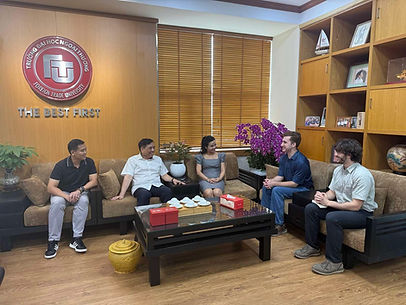
This development reflects a shift from seeing identity as fixed to understanding it as constructed and relational. In Worldviews, Cultures & Religion (RCLP 1011), we engaged with "The Leadership Challenge" by Kouzes & Posner (2017). Herein, Kouzes & Posner examine five qualities which good leaders convey. “They Model the Way, Inspire a Shared Vision, Challenge the Process, Enable Others to Act [And] Encourage the Heart” (2017). This ties into the concept of leadership by demonstrating in what ways one can be a better leader when they are able to understand the different backgrounds and paths of those whom they lead, breaking down how interpretation is shaped by our experiences and prior assumptions.
Through exposure to diverse backgrounds, including; different cultures, social classes, and histories, I embraced a framework of identity shaped by overlapping systems of privilege and oppression. As recognized by intersectionality scholars, gender, race, socioeconomic status, and other identity factors intersect to shape individuals’ lived realities in complex ways. (CRIAW, 2022) This realization challenged my assumptions of universality and made me more conscious of structural inequalities behind surface-level differences.
In the Integrative Forum courses (RCLP 1111/1112), the practice of dialogical reflection and peer feedback required me to surface those assumptions and revise them in real time. Encouraging group work, participation, and discussion-based experiential learning as a forefront. This course acts as the “core preparation” for the rest of one’s journey throughout the School of Leadership Studies and acts as a foundational base, introducing and developing leadership practice, the art of reflection, and interpretation of feedback into one’s own development.
Later, Ethics and Leadership (RCLP 3701) introduced virtue ethics (Aristotle), pushing me to consider how character develops through repeated action over time. In my senior year, taking Introduction to the History of Philosophy (PHIL1013) as an elective, these ideas of virtue were expanded upon through studying the frameworks of Socrates, Plato, Aristotle and Aquinas. These frameworks demonstrated that knowing oneself is an ongoing process of reflection, comparison, and refinement, and that truly understanding others requires acknowledging the limits and situatedness of one’s own perspective.
Moving Forward:
I will...
-
Apply reflective tools to map strengths, gaps, and behavioural patterns in future roles.
-
Use active listening and feedback loops to adapt communication across diverse teams.
-
Integrate cultural awareness practices to improve relationship-building in cross-cultural work.
-
Leverage self-knowledge to set clearer boundaries, expectations, and leadership intentions.
Frameworks & Sources
-
Ackrill, J (1989) A New Aristotle Reader. Princeton University Press, Princeton, New Jersey.
-
Burr, V. (2003). Social constructionism (2nd ed.). Routledge.
-
Crenshaw, K. (1989). Demarginalizing the intersection of race and sex. University of Chicago Legal Forum, 1989(1), 139–167.
-
Canadian Research Institute for the Advancement of Women. (2022). Feminist Intersectionality and GBA Plus. CRIAW-ICREF. Retrieved December 2, 2025, from https://www.criaw-icref.ca/our-work/feminist-intersectionality-and-gba-plus/
-
Delgado, R., & Stefancic, J. (2017). Critical race theory: An introduction (3rd ed.). New York University Press.
-
Hachey, J. (2021). Peach & Coconut Cultures: Navigating Small Talk Around the World. MyWorldAbroad Quick Guide.
-
Heyes, C. J. (2010). Subjectivity and power. In D. Taylor (Ed.), Michel Foucault: Key Concepts (pp. 159–172). Acumen Publishing.
-
Kouzes, J, & Posner, B (2017). The Leadership Challenge. San Francisco, CA: Jossey-Bass
-
McGushin, E. (2011). Foucault’s theory and practice of subjectivity. In D. Taylor (Ed.), Michel Foucault: Key Concepts (pp. 127–142). Acumen Publishing.
-
McIntosh, P. (1989). White privilege: Unpacking the invisible knapsack. Wellesley College, Center for Research on Women.